
Can massage balls help with muscle pain?
Massage balls are often suggested as a simple way to ease muscle pain.
They can be helpful — but only if used in the right way.
This article looks at where to use a massage ball, how to use it well, when it might irritate things, and how to tell if it’s actually helping.

Steven Murdoch
If you’re dealing with ongoing muscle pain or tension, it’s very common to feel unsure about how much pressure to use — or whether you might make things worse.
I use massage balls regularly in clinic and in self-care, particularly for people with persistent or complex pain. Used well, they can help you explore tension and ease discomfort. Used too aggressively, they can simply add irritation.
This article is here to help you find the middle ground.
Where should I use a massage ball?
Sometimes it makes sense to work directly on the painful area.
But not always.
Pain is often felt at a point of irritation rather than at the place where tension is being created.
A good example is IT band–related knee pain. The discomfort is usually felt on the outside of the knee. But the IT band itself is a strong band of tissue running down the outer thigh. It’s meant to be firm. It doesn’t really “release”.
The tension usually comes from higher up — especially the muscles around the hip, including the tensor fascia lata (TFL) and parts of the glutes. When those muscles hold more load, the irritation is often felt further down.
So digging into the sore spot at the knee doesn’t usually solve the problem.
The same idea applies elsewhere.
With jaw tension, for example, the jaw can be the victim — but not always the culprit. Pressing into already sensitive jaw muscles can sometimes make things more guarded. Working somewhere else in the pattern — such as the hips or upper back — can be more helpful.
I explore that idea further in the link between jaw pain and hip tension.
If jaw tension or TMJ symptoms are part of the picture for you, you can read more about how I take this wider, whole-body approach on my TMJ massage page.
The key idea is simple:
Don’t just chase the most painful point. Look for what feels connected.
How do I know I’m in the right place?
You’re not looking for the most painful spot.
You’re looking for a place that feels relevant.
Clues you may have found a useful area:
- It feels tender but tolerable
- It feels familiar — “that’s part of it”
- The tissue feels dense or guarded rather than sharp
- Your breathing subtly changes when you settle there
How hard should I press?
A common concern — especially if pain has been around for a while.

This is one of the most common questions — and a very reasonable one.
Most of us have learned that if something feels tight, the answer is more pressure. Press harder. Stay longer. Push through.
But if massage balls help, it’s rarely because of force.
Aim for around 4 out of 10 — where 10 would be unbearable pain.
Enough to feel something.
Not so much that your body tenses against it.
If you’re bracing or holding your breath, that’s too much pressure.
Pressure matters less than how your body responds.
You don’t need intensity.
You’re looking for connection.
Used well, massage balls don’t need to be painful. They can feel surprisingly pleasant — and that’s often when they’re most helpful.
How do I use a massage ball well?
Use a wall or the floor so you can control the pressure
Let your body settle onto the ball rather than pressing into it
Aim for around 4/10 pressure (where 10 would be unbearable pain)
Stay until you notice a change — softening, easing, or the sensation dropping to a 2 or 1
Where does a massage ball fit into self-care?
For persistent or long-term pain, order matters.
Massage balls tend to work best when the area is already warm.
If the tissue is cold and guarded, it’s harder for anything to change.
A simple approach is:
- Warm the area first
Use gentle heat — a warm shower, a heat pack, or light movement.
This helps increase blood flow and often softens the tissue. - Then use the massage ball
Think of it as self-myofascial release.
You’re exploring tension and allowing change — not forcing it. - Then consider gentle stretching
Once tone has eased, stretching often feels easier and more effective.
For people with persistent pain, this sequence — warm, release, then stretch — is usually more helpful than jumping straight into strong stretches.
How do I know if it’s helping?
People often expect a dramatic “release”.
In practice, change is usually subtle.
Guarded tissue can feel:
- dense or armoured
- ropey
- lumpy
- or just uniformly hard
When something shifts, you might notice:
- the tissue feels less defended
- a sense of softening
- more space or ease
- a small improvement in movement
- a spontaneous longer out-breath
Sometimes the only noticeable change is the breath.
And that can be enough.
It’s also helpful to notice what happens later:
- Does the area feel easier afterwards?
- Do you move more freely that day?
- Do symptoms settle rather than flare?
Those responses matter more than dramatic sensations in the moment.
A quick note from clinical practice
If pain flares significantly during or after using a massage ball, that’s not a signal to push harder. It’s likely a sign that the area — or the nervous system — needs a gentler approach, or a different starting point altogether.
Less is more – go light – then think “can I go lighter still?”
What does “release” actually mean?
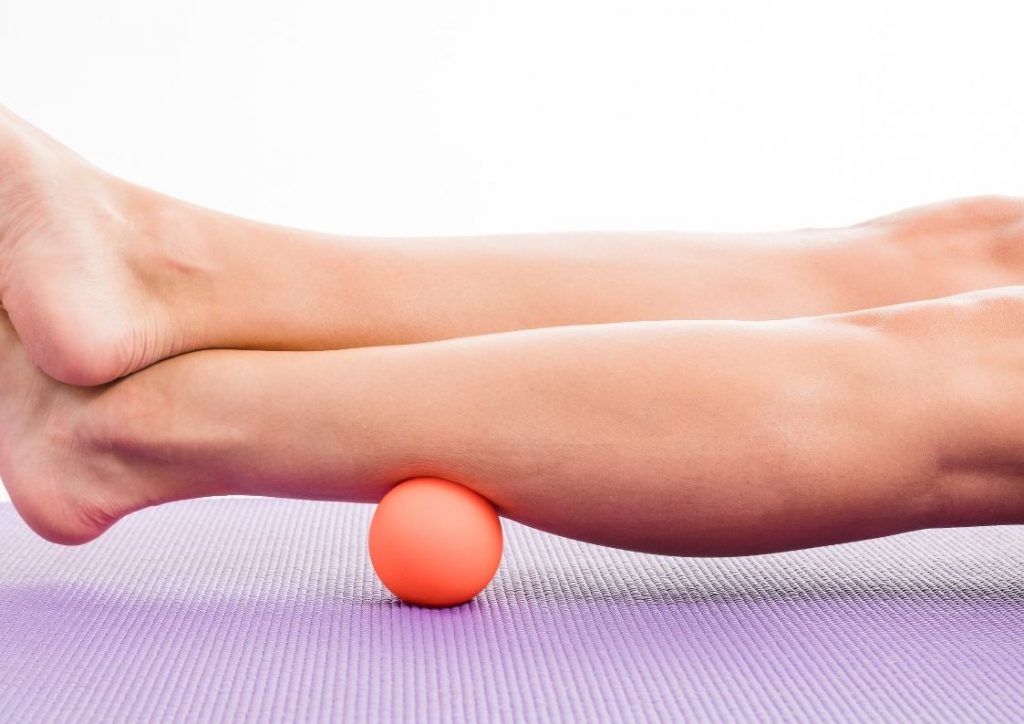
Massage balls don’t break down tissue or remove knots.
What people describe as “release” is usually a change in muscle tone — a reduction in guarding.
When the nervous system decides the input is safe, it allows protective tension to ease.
That might feel like:
- softening
- settling
- easier movement
- less resistance
In clinic, I can feel these shifts clearly. When people use massage balls themselves, they notice them in different ways — through touch, movement, or breath.
So rather than asking whether release is “real”, a better question is:
Do I feel less guarded or more at ease afterwards?
If yes, then the massage ball has done something useful.
This way of thinking — change rather than force — is especially important when pain is part of a wider pattern rather than a single tight spot.
In summary
Massage balls can help — when they’re used in the right way.
You’re not looking for the most painful spot.
You’re looking for what feels relevant.
You don’t need intensity. You’re looking for connection.
For persistent pain, think in sequence:
- Warm the area
- Use the massage ball as self-myofascial release
- Add gentle stretching
If afterwards you feel less guarded or more at ease, then it’s done something useful.
They’re not a solution on their own. But used thoughtfully, they can play a helpful role in easing muscle pain.
You don’t need to force a response.
Just notice how your body responds.
You might also find this helpful
If you’re thinking about other self-care tools, you might find it useful to read Should I buy a massage gun? — including when they can help, and when they’re more likely to irritate things.