
Personalised Online Help for Jaw Pain, TMJ & TMD
Jaw pain, clicking or clenching that won’t settle?
This page offers jaw pain help online for TMJ symptoms, clicking or clenching that won’t settle.
This tailored approach gives your jaw a better chance to improve — without unnecessary irritation.
No generic exercises.
No guesswork.
Just clear, tailored guidance.
Where would you like to start?
Jaw Pain Help Online – Is It Right for You?
See whether your symptoms are a good fit for focused, one-to-one online guidance.
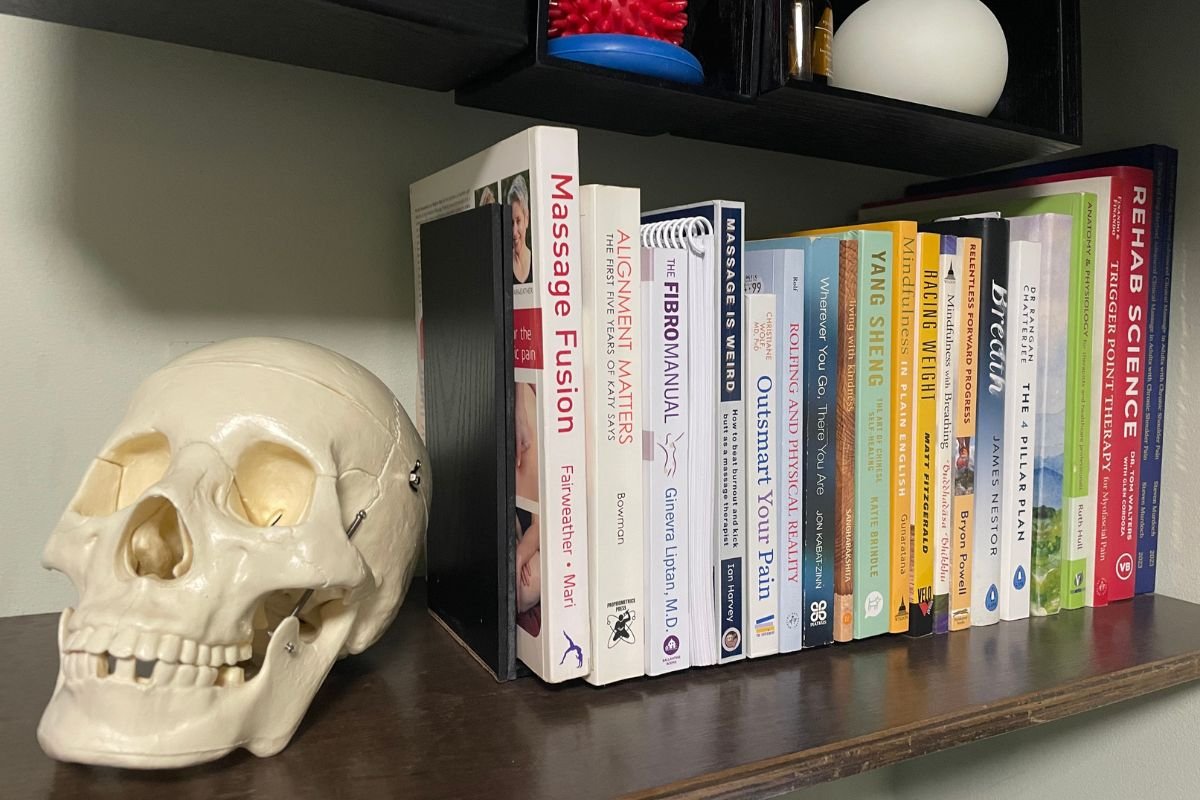
Why personalised online support matters
You can manage your own self-care, but doing the right thing for you is what matters most.
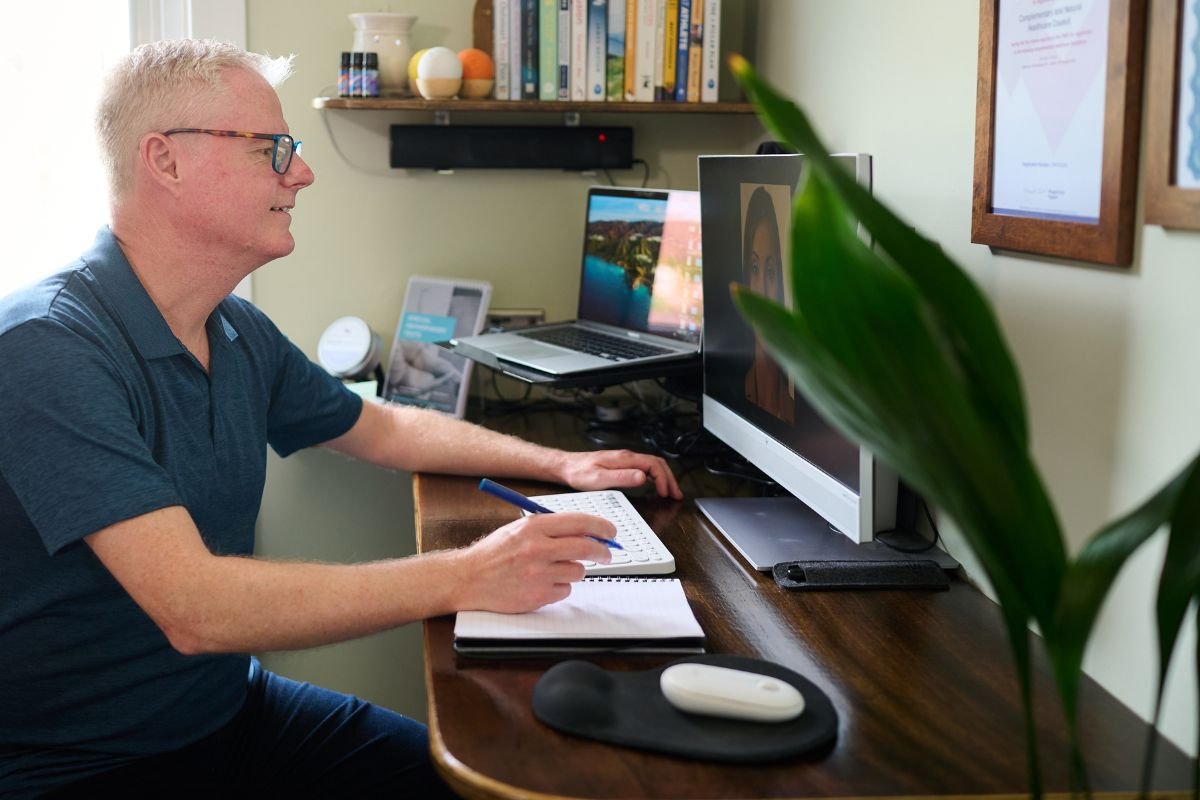
What happens during an online TMJ session?
How we explore your symptoms and shape clear, realistic next steps together.

Why I offer online TMJ support
The training and experience behind this focused, personalised approach.
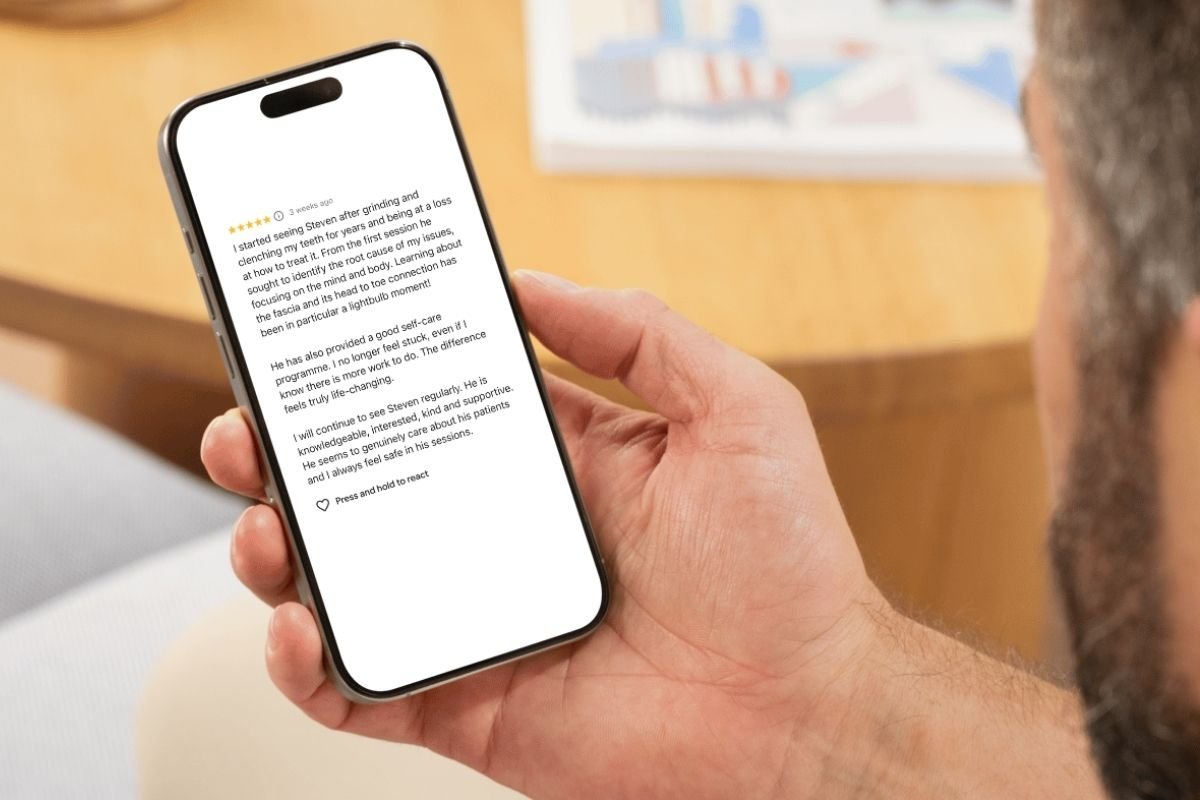
What people say about their experience
From feeling understood to sleeping better and easing tension, here’s what people say.
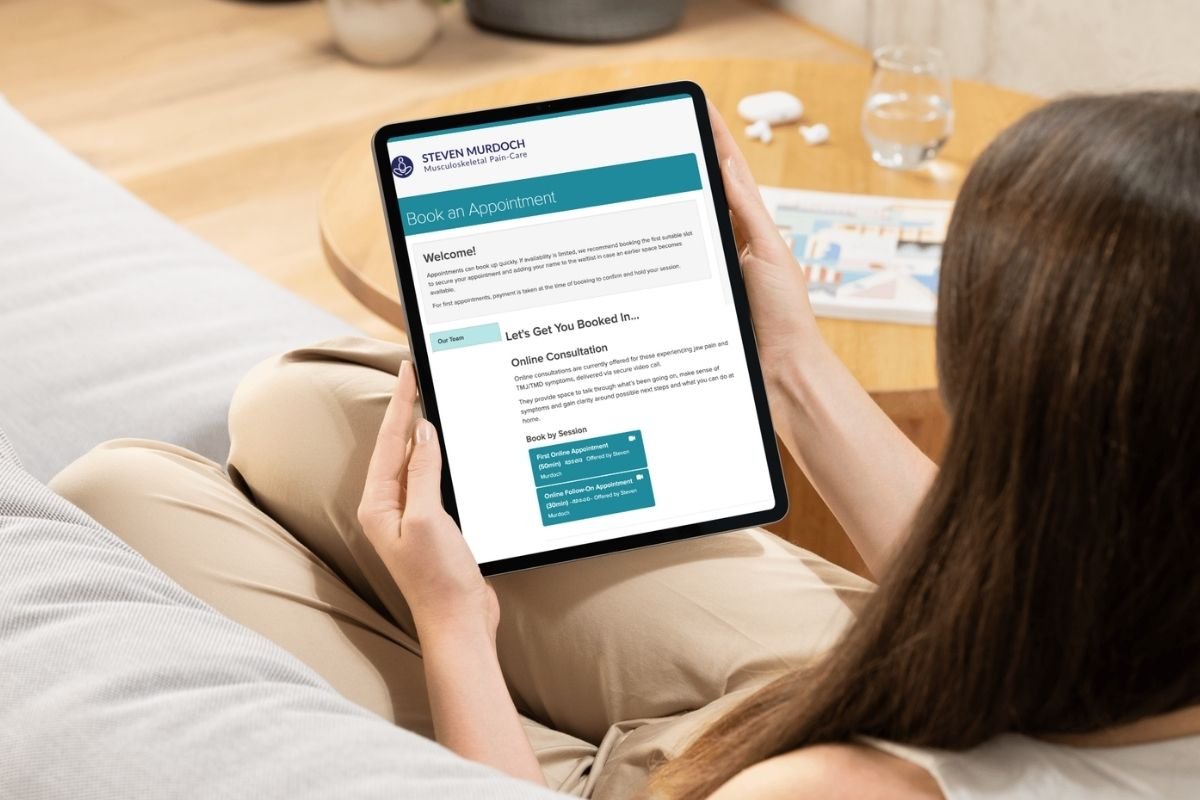
How to book and find the pricing
Ready to book your first online session? Appointment options and pricing.
Jaw Pain Help Online – Is It Right for You?
Jaw-related symptoms are often grouped under TMJ or TMD — terms used to describe pain, tension, or restricted movement involving the jaw and surrounding tissues.
Some symptoms are obvious. Others are less so.
You might recognise one or more of the following:
Jaw & jaw joint sensations
- Clenching, pain, tightness, or fatigue
- Clicking, popping, or grinding
- A sense of heaviness or overuse
Movement & everyday function
- Difficulty opening, closing, or aligning the mouth
- Difficulty chewing, swallowing, or speaking
- Shallow breathing or a sense of breath restriction
Face, head, neck, shoulders & body
- Facial tension or twitching
- Headaches or migraines
- Neck and shoulder tension or restriction
- Body tension: back, hips, or feet
Sensory experiences
- Tinnitus or earache
- Dizziness or light sensitivity
- Changes in taste or saliva
In most cases, TMD isn’t a fault in the joint itself. It often reflects how your body is managing load, tension or stress.
If you’ve had recent trauma, sudden swelling, infection, or are unable to open your mouth at all, it’s important to seek urgent dental or medical advice before booking.
An online session is to help you understand what’s driving your symptoms and decide what to do next — whether that’s focused self-care, further support, or reassurance that you’re heading in the right direction.
Why personalised online support matters
In an online TMJ session, we don’t just look at the jaw in isolation.
Jaw tension is closely linked to the nervous system and the connective tissues (fascia) that connect the jaw with the neck, shoulders, spine, and hips — including the relationship explored in The link between jaw pain and hip tension.
When the body is under physical or emotional load, it can shift into patterns often described as fight, flight, or freeze.
This can increase sensitivity, protective muscle tension, and difficulty settling. The jaw is a common place where this shows up — even when the original drivers sit elsewhere.
In an online session, this wider picture shapes how we think about your symptoms and what might actually help.
In practice, that means:
- Paying attention to the nervous system’s state, not just local symptoms
- Considering fascial connections between the jaw, neck, shoulders, and hips
- Identifying which movements, habits, or exercises are appropriate for your presentation
- Guiding a paced self-care approach, rather than pushing through discomfort
Rather than trying to “fix” the jaw in isolation, this approach helps you understand the bigger pattern — so your self-care is targeted, realistic, and more likely to settle things down.
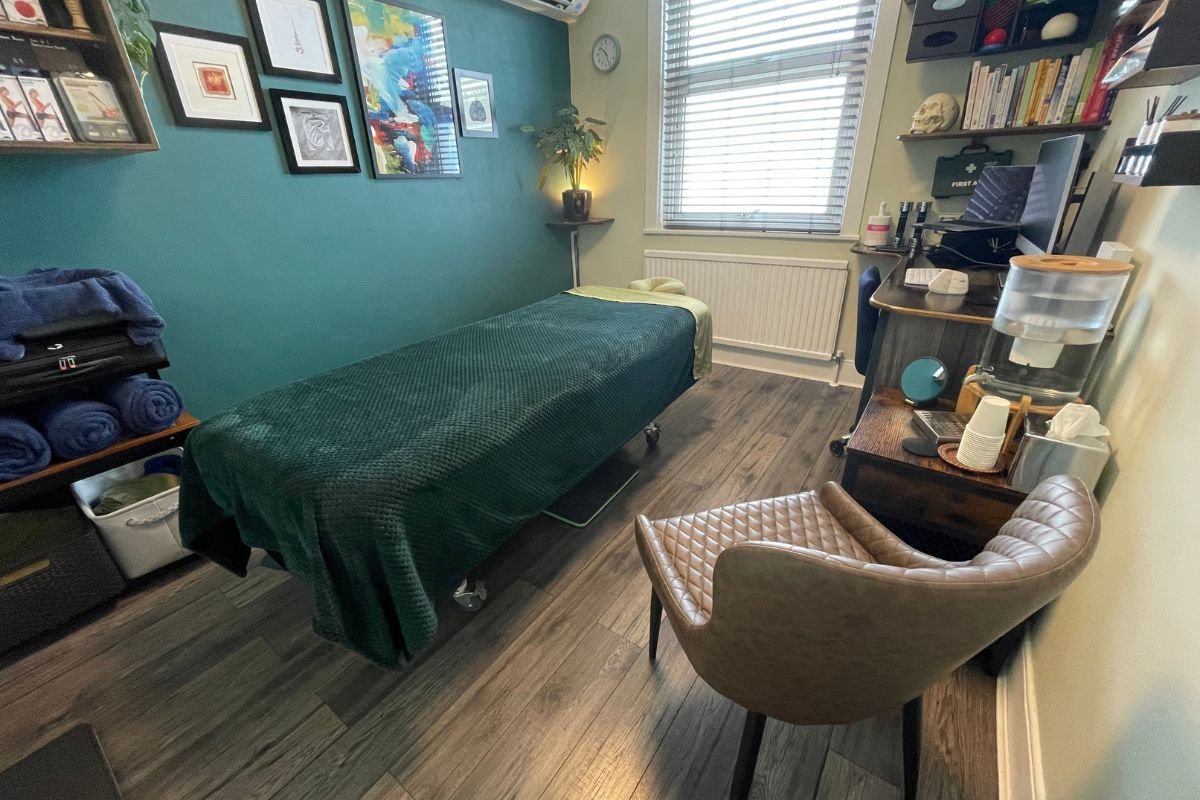
Our online sessions reflect the same care and personalised attention as if we were meeting in the treatment room.
What happens during an online TMJ session?
Sessions take place via secure video call. You don’t need any special equipment — just a quiet space where you can sit or stand comfortably.
Sessions are unhurried and collaborative.
We take time to talk through what you’re experiencing, what you’ve already tried, and what outcome you’re hoping for. Together, we look for patterns and decide what’s most appropriate for you.
An online session may include:
- Exploring how your jaw symptoms link with your neck, shoulders, breathing, or general tension patterns
- Identifying habits, movement patterns, or everyday loads that may be contributing
- Clarifying which exercises are useful for you — and which to avoid
- Suggesting simple, paced self-care ideas you feel confident carrying out
Most people don’t need frequent ongoing sessions.
Often, one or two appointments are enough to provide clarity, direction, and reassurance that you’re focusing on the right things.
We can review progress if needed, but the aim is always the same:
to give you the understanding and tools to manage your jaw confidently on your own — without feeling dependent on regular treatment.
Why I offer online TMJ support
My work with TMJ pain didn’t begin with a technique or a protocol. It grew out of working with people whose jaw pain was part of a wider pattern — involving the neck, shoulders, breathing, and how the body responds to strain.
That wider perspective is what makes online support both practical and effective.
I’m a Jing therapist trained to BTEC Level 6 in Advanced Clinical & Sports Massage, supporting a clinically reasoned, outcome-based approach guided by how your body responds rather than a fixed treatment routine — whether we’re working in person or online.
My interest in working with jaw pain led to additional specialist training in TMJ dysfunction, intra-oral techniques, myofascial release, and persistent pain, informed by modern neuroscience and nervous system regulation. The focus isn’t just on where symptoms are felt, but on how tension is organised through the jaw, neck, shoulders, spine, hips, and breathing.
A key part of this work comes from training with Helen Baker, specialising in TMJ massage therapies. I pursued this training to deepen my understanding of jaw pain — and what became clear is that meaningful change often comes from addressing the relationship between the jaw and the rest of the body, not treating the jaw in isolation.
That same whole-person understanding underpins how I work with clients online.
I explore these ideas in conversation with Helen on the Free Your Jaw podcast, where we discuss how jaw pain can relate to tension held elsewhere in the body.
→ Listen to the Free Your Jaw podcast episode


What people say about their experience
My aim is that each online session feels thoughtful, practical, and reassuring — and that it helps you feel clearer about your symptoms and what to do next. People often describe noticing things like:
- Feeling properly listened to and taken seriously
- A reduction in jaw tension or clenching
- More ease through the neck, shoulders, or upper body
- Feeling calmer or more settled after sessions
- Improved sleep, or a clearer sense of what helps their symptoms
Everyone’s experience is different, and changes don’t always happen all at once. For most people, progress feels gradual — with a growing sense of confidence in how their body responds and how to manage flare-ups.
Below are some Google review excerpts from people I’ve worked with, which give a sense of what to expect from our conversations and the self-care guidance we explore together.
How to book and find the pricing
You can view current online session options and pricing below. From there, you can book directly at a time that suits you.
Prefer in-person TMJ massage?
If you’d rather work in person, TMJ massage can be a good fit — particularly if you feel you need hands-on support alongside guidance.
In-person sessions allow us to assess things directly and use soft-tissue and myofascial release techniques where appropriate, while still keeping the focus on understanding patterns and supporting self-care between appointments.
If you’d like a deeper understanding of jaw pain, TMJ/TMD, and self-care approaches, I’ve created a separate educational resource at TMJPainCare.com, focused on helping people make sense of symptoms and explore supportive strategies at their own pace.
Frequently asked questions
These are questions I’m often asked by people considering an online appointment for jaw pain or TMJ-related symptoms. If something isn’t covered here, you’re always welcome to ask.
Often, yes — in a different way to hands-on treatment.
Online appointments don’t try to replace hands-on treatment. They focus on understanding what’s been happening, making sense of symptoms, and clarifying how best to approach things day to day. For many people, that shift in understanding alone can be very helpful.
No.
You don’t need a formal diagnosis, referral, or scans. The session is about working with your experience as it is now, rather than fitting symptoms into a label.
There’s no set number.
The first appointment is designed to stand on its own. Some people book a single session; others use follow-ups occasionally to review progress or refine their approach.
Often, yes.
Many people who book online have been living with jaw symptoms for months or years and have already tried other approaches. The appointment provides space to step back, look at the bigger picture, and decide what feels most helpful to focus on next.
If this doesn't quite fit
If your jaw symptoms overlap with other areas, change over time, or don’t fit neatly into one category, this page explains the main pain issues I work with and may help you decide where to begin.