
Myofascial Release in London
Manual therapy for persistent pain and long-standing tension.
Myofascial release (often shortened to MFR) is a soft tissue approach that works with connective tissue and holding patterns that develop over time. It’s useful when symptoms persist, appear influenced by the nervous system, or don’t settle with conventional massage and exercise.
Where would you like to start?
Is Myofascial Release Right for You?
Whether this approach fits your symptoms and history.
What is Myofascial Release?
What a connective tissue approach to persistent pain looks like.

What happens during a Myofascial Release session?
What to expect and how we decide what’s appropriate.

What led me to be a Myofascial Release Therapist?
The training and experience behind how I work.

People's experience of Myofascial Release in London
What others have noticed from a Myofascial Release approach.

Is Myofascial Release Right for You?
People book myofascial release for a wide range of symptoms, particularly when pain has become persistent or difficult to shift. The examples below reflect some of the more common patterns I work with — you don’t need to fit neatly into just one category.



Strains, sprains and tendon issues
Including:
- Muscle strains
- Ligament sprains
- Tennis elbow
- Achilles pain

Nerve-related symptoms or sensitivity
Including:
- Carpal tunnel irritation
- Pins and needles in the hands
- Sciatica

What is Myofascial Release?
Myofascial release is a form of manual therapy that works with muscle and fascia — the connective tissue that supports, wraps, and links the body.
Myo simply means muscle in Greek, so the name reflects what the approach works with: muscle and the connective tissue that envelops and weaves through it.
Fascia is a continuous, layered tissue, a bit like the thin, slightly shiny membrane you see over a chicken breast. It’s made largely of collagen and elastin, giving it both strength and elasticity.
Fascia is closely linked to the autonomic nervous system, responding to both protective and restorative states. When the body stays in protection — through injury, stress, illness, or repeated strain — these guarded patterns can persist.
Because fascia forms continuous networks throughout the body, tension rarely stays contained in one place — it can even create a link between the hips and the jaw, which is one of the more striking examples of how far these connective tissue pathways can reach.
When fascia is healthy and adaptable
- Layers are able to slide and glide
- Movement feels easy and coordinated
- The tissue is well-hydrated and elastic
- Sensation is present but not overwhelming
When fascia becomes guarded or restricted
- Layers feel stuck or less able to slide and glide
- Movement may feel restricted or effortful
- The tissue can feel dense, dry, or unyielding
- Sensitivity may increase, or nearby structures become irritated
Myofascial Release works by engaging the tissue in a slow, considered way, helping the nervous system feel safer and restoring the slide and glide that allows movement and sensation to change.
What happens during a Myofascial Release session?
Sessions are unhurried and collaborative, shaped around how your body responds on the day rather than following a fixed technique or formula.
Before any hands-on work, we take time to talk through what you’re experiencing, what you’ve already tried, and how your body tends to respond. This helps us decide together what feels appropriate and sets the pace for the session.
Treatment may include a combination of:
- Sustained holds — allowing tissues time to soften without forcing change
- Gentle stretch through the fascia — following the direction the tissue allows
- Bringing tissues together — sometimes giving an area a break rather than asking more of it
- Working locally and elsewhere — not just where symptoms are felt
At times, this may involve areas that feel clearly related. At other times, the work may be more indirect, supporting the nervous system rather than chasing a specific spot.
Most people attend more than one session, often spaced about a week apart initially. How many sessions are helpful varies from person to person, and we review this together as things evolve.
What led me to be a Myofascial Release Therapist?
Experiencing MFR as part of my own care for chronic low back pain was what first inspired me to train as a myofascial release therapist. That experience shaped my interest in working with connective tissue and the nervous system as part of pain care, alongside my wider clinical training.
As my practice developed, myofascial release became increasingly relevant in my work with people experiencing persistent or long-standing pain. Across different situations — including jaw pain, TMJ-related issues, and pain influenced by stress or fatigue — similar patterns were often present. Whether working hands-on or supporting someone through an online TMJ appointment, the same principles applied: the tissue could feel guarded or sensitive, symptoms were variable, and progress didn’t always come from more targeted or local approaches alone.
Over time, this reinforced how I work. MFR offered a way to engage with the body that is responsive rather than prescriptive — guided by how the tissue and the nervous system respond on the day, rather than following a fixed technique. This approach now underpins much of my work, particularly with people whose symptoms have been difficult to shift or who feel their pain doesn’t fit neatly into a single diagnosis.


People's experience of Myofascial Release in London
My aim is that sessions feel supportive and collaborative, and that over time they help reduce pain and improve how the body feels and functions. Many clients describe noticing changes that go beyond a single symptom or area, particularly when pain has been present for a long time.
Commonly described experiences include:
- A sense of release or softening in the body
- Feeling freer or less held, often across more than one area
- Improved movement or ease with everyday activities
- Feeling lighter, calmer, or more comfortable in the body
- Support that looks beyond symptoms alone
Everyone’s experience is different, and change doesn’t always happen all at once. For most, progress feels gradual — with a growing sense of trust in how their body responds over time.
Below are a few excerpts from Google reviews that give a sense of what clients have noticed during sessions and as things develop.
How to book and find the pricing
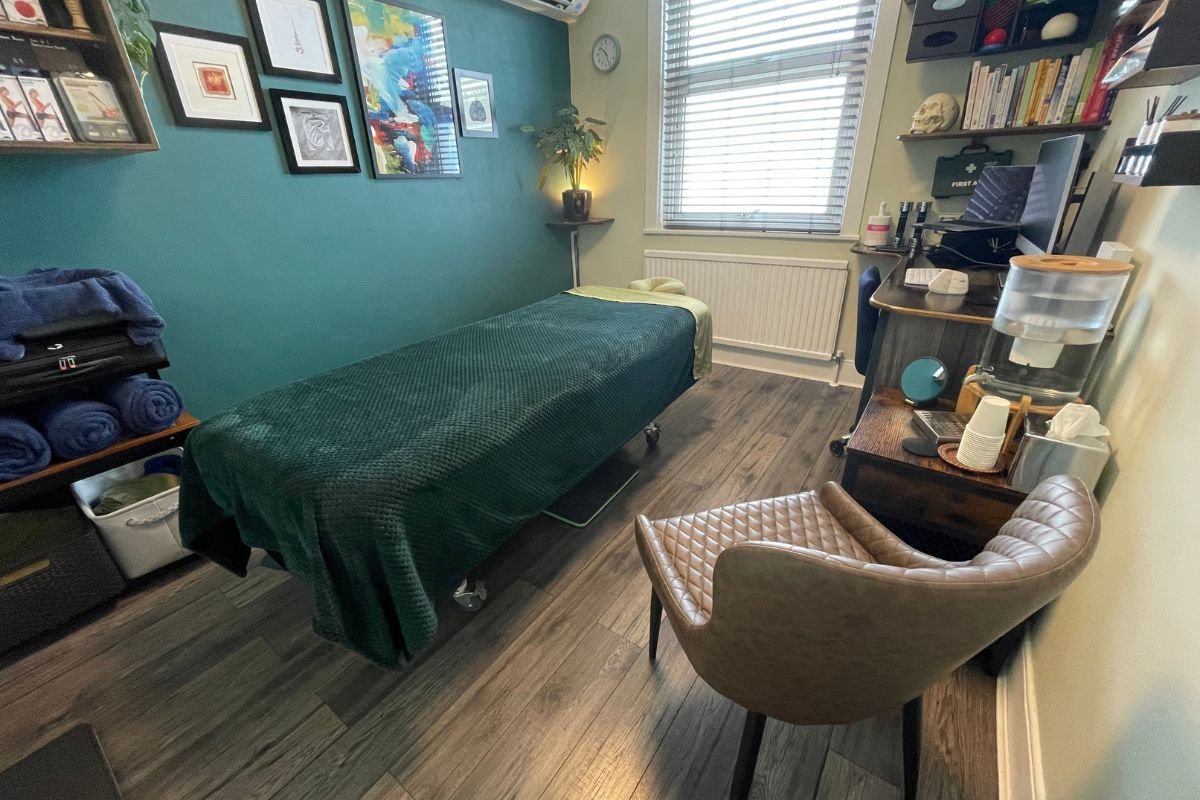
Myofascial release sessions are available in person in London (N13). You can view current treatment options and pricing below, or book an appointment directly.
If you’re unsure about treatment, a free telephone discovery call is available — it’s a great way to explore if this approach is right for you.
Frequently asked questions
These are questions I’m often asked about myofascial release therapy. If something isn’t covered here, please feel free to get in touch.
While both involve hands-on work, myofascial release is usually slower and more focused on connective tissue and how the body responds, rather than working muscle by muscle or using set techniques.
In practice, the two overlap significantly. Neuromuscular therapy developed in Europe in the 1930s, originally through the work of Stanley Lief — and notably, it was developed right here in Britain, at his nature cure resort in Hertfordshire. It was built around the relationship between soft tissue, trigger points, and the nervous system.
Myofascial release grew from a parallel tradition, with a stronger emphasis on fascia — the connective tissue that runs continuously through the body — and how it responds to both physical and nervous system states.
The underlying aim is the same: to work with the connection between tissue and the nervous system to reduce pain, release holding patterns, and restore ease of movement. If you’ve come across the term neuromuscular therapy and wondered whether myofascial release might offer something similar, the short answer is yes — the language differs more than the intention.
Myofascial release is not about forcing change. Some areas may feel sensitive or unfamiliar at times, but pressure is always guided by how your body responds and adjusted as needed.
Fascia is the connective tissue that runs continuously throughout the body — surrounding muscles, organs, nerves and bones in a layered, interconnected web. It’s made largely of collagen and elastin, giving it both strength and flexibility.
Fascia is closely linked to the nervous system, responding to physical strain, stress and injury by becoming less mobile or more sensitised over time. “Fascia release” refers to hands-on approaches that work with this tissue to help restore its natural mobility and reduce the pain or restriction that can develop when it becomes guarded.
Myofascial release is one such approach, working gently with the tissue and nervous system rather than forcing change.
This varies from person to person. Some people notice changes early on, while others benefit from a short series of sessions. We review this together as things evolve rather than fixing a number in advance.
Responses vary. Some people feel lighter or freer straight away, while others notice changes over the following days. It’s also common to feel more aware of movement or posture as things settle.
Myofascial release is often explored when pain has been present for a long time, feels widespread, or hasn’t responded well to more local approaches. Whether it’s appropriate for you is something we decide together.
If this doesn't quite fit
If your symptoms overlap with other areas, change over time, or don’t fit neatly into one category, this page explains the main pain issues I work with and may help you decide where to begin.